Romancing the Screen

  • Blog
  • About The Author
Film Review: Under the Blossoming Cherry Trees (1975) dir. Masahiro Shinoda 05/16/2011
3 Comments
 
Picture
The wild and disorderly inhabitant of the mind known as Obsession is the sole antagonist in this chilling and unforgettable tale by the legendary Japanese New Wave director Masahiro Shinoda. When putting this film into perspective one might associate its lucid, fable-esque qualities with that of Masaki Kobayashi’s Kwaidan or perhaps liken its ethereal romance to Kenji Mizoguchi’s Ugetsu. Though both Japanese classics, I’m sure, were influential on Shinoda during the production of Under The Blossoming Cherry Trees, only by unraveling the latter’s singular form of expressionistic terror does one begin to appreciate it as an irreplaceable revelation in its own right.

This is Shinoda's one and only horror film. His approach to the genre is similar to that of Ingmar Bergman and his experimental horror film Hour of the Wolf. Both favored psychological perversion over jump scares, bloodletting and other mere conventional tropes of the horror brand. Both examined with gut-wrenching vitality the pervading and conquering facets of human emotion.

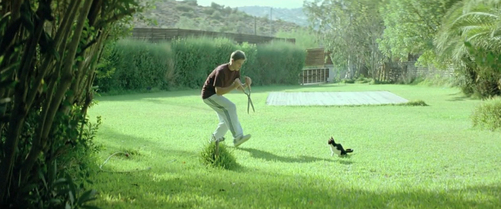
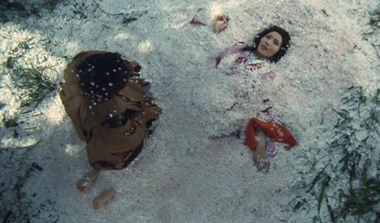
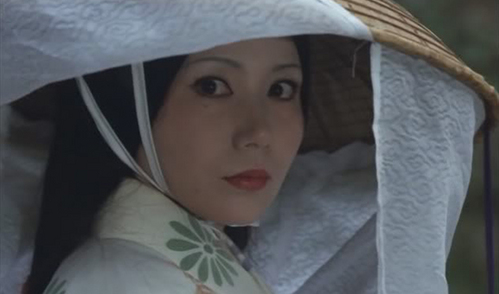
A mountain-man becomes consumed by a sexually driven desire to please a beautiful woman whom he falls in love with after a bizarre encounter in the forest. She offers herself in exchange for his full commitment to her well being. Her first proposal of accommodation stems out of heartless jealousy. She commands him to kill his many brides whom he keeps as lovers and without hesitation he complies— leaving one alive, as she commanded, to serve as her maid. After the deed is done the grim aftermath is hardly reflected upon—a paradigm of the films unflinching concern with the grotesque and the macabre. The first examination of manic delusion experienced by both the mountain man and the woman is exemplified in this chaotic scene.
Picture
The woman’s self-pity is unrivaled. Her apparent “sacredness” is the driving force behind the mountain man’s unapologetic devotion to her comfort and happiness despite his suffering. The act of murdering for love parallels a sort of flattery, albeit demonic, which the woman feels she is entitled to. She not only enjoys this adulation but develops a literal connection to the heads of the murdered victims. As a master puppeteer personifies a soul inside the marionette, the woman confidently embodies her emotional enthusiasm within the severed heads of the dead. The mountain man is given the order to execute and decapitate many travelers during the course of their stay in the forest in order to keep her satisfied and to repay her for leaving a life of elegance to live with a mountain man.

During one such occasion a group of monks are seen traversing a road under a cherry tree forest. The trees themselves, forewarned by an earlier scene of the film, are presumed to be magical. In fact they are deadly. Knowing this, the mountain man stays at a safe distance and watches as the trees infect their guests. A terrifying yet beautiful sequence of delirium unfolds.

Much of the film is formed by the dramatic nature of the narrative and the insistency of the diabolical woman. In the end it is the blossoming cherry trees that capture the unique spirit of the film in a thrillingly horrific finale that will leave you grasping for air. Don’t go under the trees!

Picture
3 Comments
 
Film Review: Lost in Translation (2003) dir. Sofia Coppola 05/09/2011
0 Comments
 
Picture
Embracing a friendly ecosystem of technology and innovation interwoven with rich, cultural traditions of the past, Japan and its people are steeped in majesty. It is a cheerful country of idealistic perspective and determination among natives and foreigners alike. Though this illustrious island is a marvel to behold--both culturally and philosophically--it is without question one of the most introspective environments to find oneself in. As a case in point, Sofia Coppola's tour de force film Lost in Translation recalls a very specific egoism in examining the relationship of two equally lost souls.

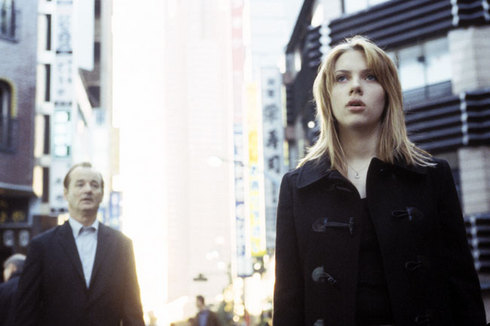
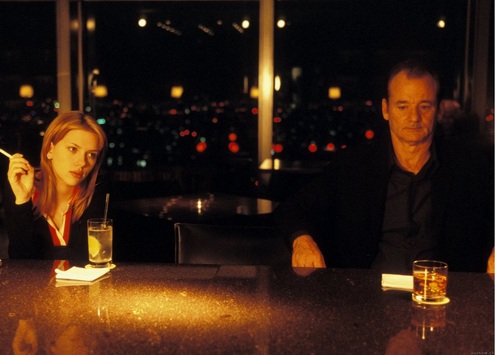
Bob (Billy Murray), a husband, father and American television/film personality arrives in Tokyo with a business commitment to endorse the Japanese Suntory whiskey brand. He finds it hard to adjust to the oddity of Japanese hospitality and his motivation as an endorser quickly spirals into a banal and unfortunate obligation. He spends his evenings at the hotel bar and, luckily for him, the whiskey works wonders. Bob inadvertently meets Charlotte (Scarlett Johansson), a young and unassuming Yale graduate. She is accompanying her photographer husband (Giovanni Ribisi) on an business trip. As with Bob, Charlotte cant help but feel lost in translation. A sense of abandonment and dissolution confine her to her hotel room. Initially, her husband's indifference to her well being is painful to watch. His attitude only heightens an already profound struggle for Charlotte. The film establishes this feeling of desertion very well in its the first few sequences.
Picture
So, Bob and Charlotte meet as two, mutual identities in a foreign land and a complex dichotomy is sparked in this encounter; one that stems from a deep-rooted passion. The story here takes a turn for the better as both Charlotte and Bob begin their journey towards a brief yet deeply existential enlightenment. Bob may not be the altruistic and accountable male figure that exists in the fairy tales but his temperament is no less honorable. Though under the gaze of a secure and grounded reality his sense of humor rings hopeful for the audience and, especially, for Charlotte. They laugh together and spend much of their time in full disclosure. For Bob, Charlotte is seen as a refreshingly carefree companion. She is his remedy for a disembodying existence in a world so far away from any true engagement. Their fellowship symbolizes a spiritual closeness in which a mutual regard for stability blossoms into a loving rapport.

When the time comes for Bob to leave the country and return to his family, this symbolic closeness has almost matured into a full-fledged reality. The risk is great, for to leave now is to begin an entirely unfamiliar and futureless journey and to vacate all possibility of a destined life in Japan. Yet some moments, however fantastic and enlightening, are meant to be brief. When the two say their goodbyes that sense of detachment arises again but this time the pain is more intimate.

Picture
No such struggle exists without a poignant and tender response. Bob, one his way to the airport in a taxi, sees Charlotte walking amidst a crowd. He tells the driver to stop, abandons his inevitable future and heads for the girl of his not-so-distant past. In a crowded street two lost souls rekindle their flame in a single embrace that is both restrained and profound. Words cannot describe the mysticality of this moment and, though we will never know what Bob whispered to Charlotte during those few passionate seconds, this loving encounter is all we really need to understand its significance. Bob ends this steadfast farewell with a soft kiss. They part ways and during the last few moments in view of one another they are together and in love.
Picture
Add Comment
 
Top 10 Films of 2010 02/27/2011
0 Comments
 
Picture
At the end of a very exciting decade in cinema, 2010 does not fail to intrigue. Sure we were left with quite a few disappointments before the year was over (more than most recent years it seems) but we were also exposed to many valuable gems to be appreciative of.  Here is a carefully constructed list of the top films of the year as viewed by yours truly. Enjoy!

By no means have I seen everything film that was released this year so please do consider that when reading.

10. I'm Still Here (dir. Casey Affleck)

Picture

The most engaging documentary of the year, I'm Still Here (Casey Affleck), is also the most misjudged. The enigma of Joaquin Phoenix has been dissected, ridiculed, shunned and laughed at. Whether you believed it or not, this strange persona has fascinated many of us and with this film/social experiment Affleck and Phoenix epitomized the way we perceive what we don't understand. Though it won't happen, Phoenix deserves an Oscar for this performance of a lifetime; especially considering it took over 3 years to achieve.

9. The Illusionist (dir. Sylvain Chomet)

Picture

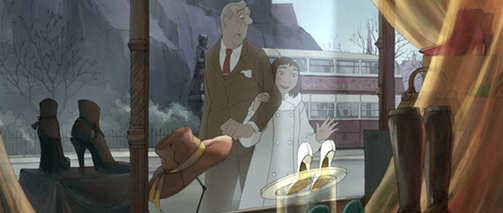
Some very talented hands were involved in the creation of the most enchanting animated film I've seen in quite a long time. The Illusionist exudes a very special charm. There is almost no dialog in the film. Instead, an alluring relationship, bound by illusion, instills in the two protagonists an emotional connection that is both heartbreaking and beautiful.

Read More
Add Comment
 
Film Review: Dogtooth (2010, Greece) dir. Giorgos Lanthimos 02/17/2011
0 Comments
 
Picture
In order to appropriately digest the material in Dogtooth one must foster and ascertain a particular state of indulgent, preferably humored, appreciation for morbidity. The concept of open-mindedness certainly applies here; of without which one would most unwaveringly condemn any sort of value a film like this may hold.
At its core, Dogtooth is part dark comedy and part Freudian psychoanalysis. The former indicates the tone and the latter dictates how we are to perceive the events of the film and in what context are we to evaluate them. 

Greek auteur Giorgos Lanthimos’ film has much to praise with intriguing and downright haunting vocal and aesthetic compounds similar to those found in Austrian filmmaker Michael Haneke’s oeuvre. In comparison, both filmmakers (though I have only seen one from Lanthimos) rely heavily on interpretive studies and less on storytelling or narration. Metaphoric observation is immense in consideration to understanding Dogtooth’s societal merit as well as its artistic language. I particularly enjoyed the looming thread of instability, vaguely pronounced yet streamlined as if all the eccentricities of the characters were fastened to it, giving the film a sense of unassuming terror.
Picture
While I had nothing to detract from the film’s prose, I did indeed find it quite alarming when applied to Lanthimos’s lack of abrasive and unconvincing analysis. He has disguised his film with an artful production and fantastic performances yet only hint's at elements of meaning through a somewhat basic and often infuriating pseudo-analysis of sexuality, social conduct and violence. We see these areas of speculation but are never able to evaluate them. In this regard there is a lesson to be learned by studying Haneke. His greatest achievement, The Seventh Continent, works by way of using interpretive analysis through its slow-burn, behavioral expression and systematic circulation. The problem with Dogtooth is that it never goes deep enough and simply flat-lines before we can discern anything. We are allowed, or should I say forced, to invade this home where some terrible form of narcosis has taken over the minds of these poor individuals, yet during our unfortunate stay we not only learn nothing about their condition, but find very little, if anything at all, to assimilate to any kind of necessary comparison. The stagnant air of desolation keeps us at bay from the [albeit humorous] atrocities instead of relating it to the audience. Lanthimos uses this vulgarity in a distinctly perverse method and seems to shed, intentionally, all empathy in favor of brute ridicule and scorn. This willingness to portray the victims as a part of some elaborate joke is as harsh and scheming of a method of fabrication as one would likely find necessary in the art of film save blatant manipulation or gimmick; i.e. Saw, Hostel (a level to which I don't quite think Dogtooth has fallen). 

With such a provocative concept I would liked to have seen more believability and substance, as well as sympathy and vindication, but instead we are stuck with a perception of society that is cryptic and ignorant of its own potential.

Rating

Picture
Add Comment
 
Film Review: The Girl with the Dragon Tattoo (2009, Sweden) dir. Niels Arden Oplev 10/25/2010
0 Comments
 
Picture
I went into this film wearing my badge of pride. I avoided the trailers and the, apparently larger than it seems, hype surrounding the adoration of the posthumously published “Millennium” trilogy that sparked its very own inevitable cinematic retelling. I wasn’t influenced by a friend who read the books or someone who could vouch for the film. I wasn’t interested in figuring out where it came from and I wasn’t prepared for anything in particular.

The film deals with the most universally frequent curiosities our time: violence, death, war, murder, sex, rape, racism, conspiracy, betrayal and the list goes on. When such themes are introduced we naturally respond with strong opinions. We ask questions: Why did this happen? How can we stop it? However, these questions are often overshadowed by the primary nature of the film. Great filmmakers, i.e. Michael Haneke, Lars Von Trier and Ingmar Bergman just to name a few, are able to stray away from the cliched conventions and admit that humanity is not that easily understood. They ask questions, leaving the answering to those who are willing to seek the hidden truth—ones interpretation becomes limitless. This brings me to my many problems with The Girl with the Dragon Tattoo.
Picture
Things I liked

- The character Lizabeth was particularly interesting to me. Though she wasn’t necessarily a completely original cinematic figure I cant think of one other “punk-rock computer hacker chick”. She was inspiration to those who have been through what she’s been through or know someone who has. A very relatable person. Though unfortunately her development was slowed and often redirected as a result of the films unfortunately dull narrative structure.

- The relationship between Lizabeth and Mikael was often portrayed excellently. Though I’m still not sure as to why she was so attracted to him in the beginning of their relationship (just out of curiosity? doesn’t seem very stable an argument) but towards the end of the film their moments together are wonderfully expressive and believable.

- The Swedish language: I’m a sucker for foreign languages especially when a women are speaking and especially Swedish women…but enough about me.

Star rating on next page [SPOILERS]


Read More
Add Comment
 
Film Review: Black Swan (2010, USA) dir. Darren Aronofsky 10/18/2010
0 Comments
 
Picture
Soon to hit limited audiences throughout the US is the latest visionary accomplishment from the man who is, in my mind, the strongest and most appropriate contender for this year’s Best Director at the Oscars. However, despite a radical and abundant fan following regarding his filmography, which has sparked controversy and split audiences, Darren Aronofsky’s newest film might prove to be his most extreme yet, which may or may not appeal to those who vote.

Black Swan is a psychologically pulverizing reconstruction of the famed and revered Russian ballet Swan Lake. Aronofsky applies his vision to a singular narrative concerning a group of young dancers surrounding the production of Swan Lake which serves as the core that feeds the film’s pulsating reveal. Black Swan explores this concept from the perspective of Nina (Natalie Portman), a talented young woman trying desperately to achieve perfection in her art. The film takes itself quite seriously in a psychological sense and from the very first scene we are exposed to her perverse attitude towards this production as a means to excellence and success. Competition gets heated when a gifted rival, Lily (Milla Kunis), begins to outperform Nina. 

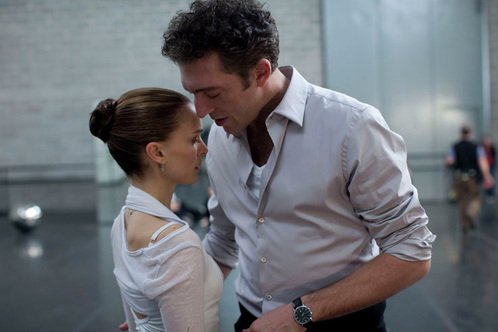
The production of Swan Lake requires one ballerina to perform two very distinct roles: the innocent and charming Whit Swan and the sensual and bewitching Black Swan. The approach to each performance must be unique and confident. Nina’s grace and discipline wins her the part of the White Swan quite easily but as a seductress she is not able to please her instructor, Tomas Leroy (Vincent Cassel). With Lily being the prime candidate Nina vows to overcome her timid behavior and win back the role. Both dancers clash, at first, but a strange relationship forms between the two as Lily becomes more supportive of Nina. They find ways to get along despite still being opponents in Lily’s mind.
Picture
Shortly after Nina, questionably, earns the lead role as the Swan Queen she begins to suffer from a noticeable separation from her fellow dancers as well as the heightened pressure of mastering the role brought about by her instructor. Adding to this embellished feeling of isolation her mother, and sole caretaker, develops a mysteriously unstable obsession with supervision and guardianship. These circumstances no only affect Nina’s performance but also her mental condition. Before long she is terrorized by hallucinations which purge and eventually subjugate her state of mind. 

Looking back at the films trailer one would undoubtedly place some curiosity upon the so-called metamorphosis or transformation of Nina. I was curious how much of a role this would play in the film and whether or not I would feel let-down in the process. To be honest not once did I feel cheated by the film's methods; its fleeting optimism and increased tension paved the way for Aronofsky’s brilliant and unsettling use of genre clichés. The seamless transitions from dark humor to grotesque horror to sexual desire are astonishing and never predictable.

Bodily horror has been sort of a motif in all of his films but with Black Swan Aronofsky has outdone himself. Prepare to be unnerved. Like out of some nightmarish fantasy comes the twisted and shocking depiction of insanity and torment that carries the film’s traumatic tone with vitality that rivals any Hitchcock, Polanski or Cronenberg. Some of the scares are genuinely terrifying. Nina attempts to perfect her role as the black swan so much so that she literally embodies it. The mind can only take so much stress before finding other ways to make sense of things. The role consumes her as a parasite consumes its host. The progression is slow but vicious—seeking an audience with patience to wrap in its vice-grip. Aronofsky will challenge many with this film and for some it will prove to be too much. 
Picture
Along with Nina’s mental and physical anxieties she is forced to come to terms with herself as a woman. This is just as much a coming-of-age tale as it is a horror and to be completely honest the combination is quite spectacular. Her instructor has taken her under his wing, so to speak, as his newest talent prospect. Their relationship is certainly sexually charged, yet his intentions are not strictly relational for he seeks to take advantage of her vulnerability as a means to exploit her darker side in hopes of ultimately helping the production.

Black Swan is just what American cinema needs in a time when, internationally, we are lacking artistically. Unfortunately this film will be shown to limited audiences but I challenge all who are looking for something exciting and innovative to check out this film like I did and you will not be disappointed.
Picture
Add Comment
 
Film Review: Hunger (2008, UK) dir. Steve McQueen 09/27/2010
0 Comments
 
Picture
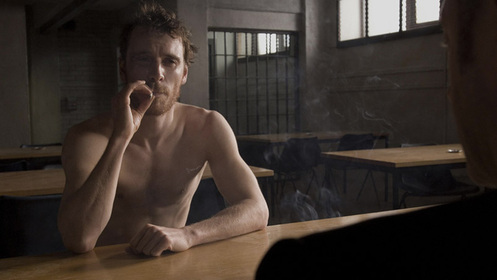
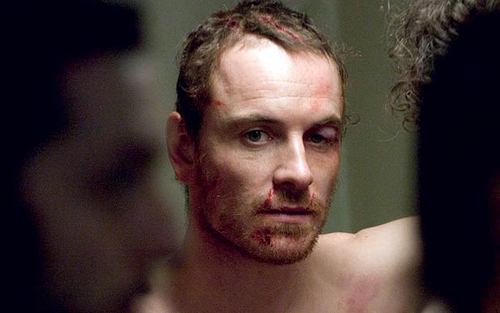
This historically fictionalized film is based on an account of Bobby Sands (Michael Fassbender), the Provisional Irish Republican Army (IRA) volunteer who led the 1981 Irish hunger strike and participated in the no wash protest in which Republican prisoners tried to regain political status. It dramatizes events in the Maze prison in the period leading up to the hunger strike. The film is intensely moving.

First time British director Steve McQueen drops us, without landing gear, in the midst of vicious brutality. Without prior investment we are situated within the detainment facility as a bystander to the beatings and mistreatment of malnourished prisoners. The violence was realistically conveyed in a slightly more appropriate manor than, say, Salo, or the 120 Days of Sodom.

This is not a black and white depiction of history, nor is it manipulative. The answers we are looking for are never revealed but instead we are dealt, incidentally, a mixed bag of emotions. A seventeen minute, single shot take tells us that there are two very different opinions on this social incident, leading down two very different paths of righteousness. Sands believes that he is doing the right thing, the human thing. During this scene he converses with a priest about the finality of this unfortunate circumstance and, as the priest tries to convince him of giving in to save his life, Sands never gives it any thought. With a firm belief in all things just and virtuous in the world he is willing to do anything to make a difference. This may be the most challenging scene in the film.
Picture

I was awe-struck throughout, not only by its masterful photography but also the desolation of the setting and the loneliness amidst the unsettling courage of Sands. To say Fassbender did what he could for the film would be an understatement. His physical performance was phenomenal, certainly the role of a lifetime and one that will stick with his audience for ages.

I was initially interested in Hunger because I wanted to know why and how this happened. McQueen does an excellent job at presenting those questions in an analytical sense, much like the famed Austrian director Michael Haneke and his unflinching masterpiece The Seventh Continent. Both films are similar in more ways than one—placing the physicality of the acting above all else, relying on long takes for symbolic interpretation and systematically studying a historical tragedy.

Hunger is a masterpiece of the 21st century and I hope to see much more from Steve McQueen in the near future.
Picture
Add Comment
 
Film Review: Black River (1957, Japan) dir. Masaki Kobayashi 09/20/2010
0 Comments
 
Picture
Very few figures in cinema during WWII were as delicate, and at the same time, profoundly expressive as Masaki Kobayashi. As a director, the portrayal and apparent exposé of his country’s atrocities formed Kobayashi’s reputation as an undisguised manifestation of integrity and brutal honesty. His films exist not only serve as reminders but as unyielding indicators to the forces of human capability. Moving towards this grand idea of ultimate, unbiased perception, his work gradually matured and progressed; displaying a more aggressive focus on clarity amidst his fiction as time went on.

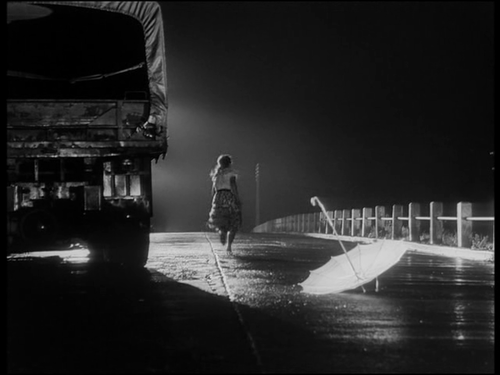
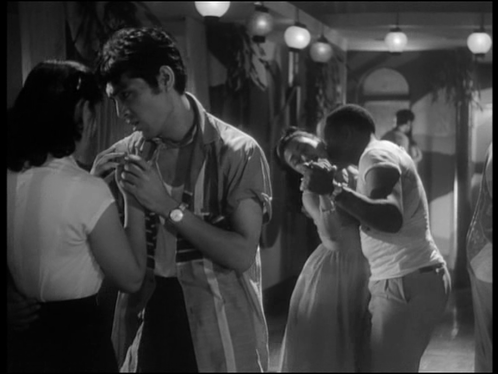
With Black River, this vision is pronounced rather acutely through a unique look at a certain post-war US Air-Naval base in Japan. The coexisting lives of the G.I.’s and Japanese heightened the intensity of life during a difficult transition after the war. The atmosphere is heated, both metaphorically and literally, as a singular motif—an umbrella—establishes both mood and theme.  The symbolic nature of the film is that of security and comfort, or lack thereof, and; as the core characters seek shelter from the hurricane of gang violence, economic troubles and forlorn yet irresistible love, they are unable to do so, and so must linger--surrounded--with no protection to shield them from the storm. This adversity will lead to Kobayashi’s status as one of the most imperative filmmakers in Japanese cinema.

The protagonist of the film, the young and joyful Nishida (Watanabe Fumio), is a new tenant with a studious and persistent mind. At the first sight of Shizuko (Ineko Arima), the umbrella-wielding beauty, by way of circumstance, he seems quite embarrassed to be in the company of such a lovely young lady yet upon a second encounter he makes it a point to encourage another meeting in the near future. They part ways in feverish innocence.
Picture
“Killer” Jo (Nakadai Tatsuya), an illustrious local and portent of violent behavior, looks down upon this quaint departure from his balcony and sees this as an opportunity to make an appearance. Long has he sought after Shizuko and this budding romance between her and the “new guy” must not progress.  It’s great to see Nakadai in a more vibrant and fun role than that of his somber, looming persona that stole the show in Kihachi Okamoto’s Sword of Doom (1966) or his similarly ominous and intense portrayal of Hanshiro in Kobayashi’s masterpiece Harakiri (1962).

Quite a different dilemma is mounting at the dormitory where Nishida is currently housed as the complexity in living expenses is proving much too difficult to maintain a healthy lifestyle. Many of the tenants are suffering and, to make matters worse, the landlady, along with the help from none other than “Killer” Jo, has crafted a ploy to “legally” demolish the homes to make way for a public bathhouse. These conditions, enhanced by Kobayashi’s use of dark rooms vs. harshly lit, open spaces and his comprehensive, tantalizing dialog, illuminate the films violent and tragic tone.
Picture
Add Comment
 
Film Review: The American (2010, USA) dir. Anton Corbijn 09/08/2010
0 Comments
 
Picture
Dropping the convenient charm and well-groomedness of his established career, Clooney turns inward. We now associate him with grim and unyielding intimacy. He has permeated his latest performance with one of the most gorgeous displays of genuine emotional torment in recent history and what a better time to bring that kind of impact than at the tail end of a mundane Summer at the movies.

The American, a strikingly poignant tale of self-betrayal and secrecy, is far from your average conspiracy thriller. Bourne is nowhere in sight instead we come to observe the secret life of simple and solemn Jack. Simple Jack, no relation to the Ben Stiller, is a master assassin and is sent to a small town in Sweden to peruse his “work”.
Picture

It begins with the most memorable opening scene of a film I can remember. An abhorrent tragedy induces in the audience a fear of the man and the world of terror and violence that engulfs him. Director Anton Corbijin’s narrow, scoped vision is astonishing.  Enhanced by classic, noir-ish elements, melancholy constituents of distrust and the elevation of personal judgment within the character Jack, the film is anything but formulaic. The narrative essentially unfolds from within and its flow is seamless and fascinating.


Tension is relentlessly drawn out as we follow Jack in and out of danger. As his weaknesses are exposed his salvation seems nearly hopeless. Two major characters, a priest and a prostitute, challenge his humanity in heartrending and evocative ways. The latter is given much screen time late in the film as Jack recognizes a newly proposed life of possibility and commitment.  


The final scenes bring down a house of cards and, as this new life is ultimately sought after, certain sacrifices are made.  A film this foreboding and emotionally saturated might prove too much for some to grasp but with careful awareness and consideration paid you will not find a more captivating American film this year.
Picture
Add Comment
 
CINEMA 21: WONG KAR-WAI - BY SEAN HESPELL 09/08/2010
0 Comments
 
Picture
“For me, shooting an action scene is no different from shooting a love scene. What really matters is what happens before the penetration and not after.” ~ Wong Kar-Wai

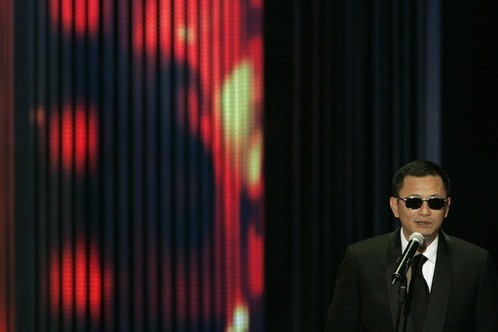
Currently ranked third on Sight and Sound’s poll of top 10 directors of modern times, Wong Kar-Wai, not unlike the enchanting images captured below, could very well be identified as the quintessential freeze-frame of 1990s Hong Kong cinema. Each WKW film, though undeniably unique in perspective, contains similar themes and filmic aesthetics that provide a universal understanding and a level of coexistence that is rarely obtained by a filmmaker or artist for that matter. A deconstruction of any WKW film must be clear and provocative, yet thorough. That is why, for the sake of this introduction, I am going to cover the basics, confident that it will be enough for those not already a member of the club to use as a way in. However, before understanding WKW as a filmmaker, it is important to unveil his post-modern disposition.


Brief Glimpse of Chinese Cinema (1940s-60s)


During the unbending growth of a thriving propagandist censorship responsible for nearly twenty years of communist dominion, the Chinese film industry blossomed. Mass production of a dogmatic and cultivating film society began and soon fashioned itself as a massive consumer‘s market, obscuring the presence of cinema as an art.

These creative influences were merely a faint glow in the shadow of the Communist Party of China and so the essence of Chinese-language cinema inevitably shifted to Hong Kong.

Wong Kar-Wai


Born in Shanghai in 1958, WKW remained in mainland China for all of 5 years before his parents made plans to leave for Hong Kong. When they arrived the switch became more than a simple transition due to a major language difference. WKW, accustomed to Shanghainese and Mandarin, was not familiar with the isolated, Cantonese dialect of Hong Kong. This communication barrier resulted in a difficult year or two of adjusting and many days spent at the local cinema with his mother; a celebrated memory of Wong’s which lead to an early appreciation of European and Western cinema as well as a mix of Cantonese (native Hong Kong dialect) and Mandarin (dominant dialect of the Mainland émigrés).

WKW
developed an interest in graphic design and began attending school at the Hong Kong Polytechnic University. After graduating in 1980, he pursued a career in television, eventually landing a position as screenwriter/director through an apprenticeship with Hong Kong actor/producer Alan Tang who starred in the 1976 romantic-comedy Run Lover Run—the film also co-starred Bridgette Lin who played a role in a number of Wong Kar-Wai‘s films.
After eight years in creative custody, his producer offered him the chance to direct a film in the popular gangster genre.

Read More
Add Comment
 
<< Previous

    SPOTLIGHT

    Picture

    QUOTE

    “Juxtaposing a person with an environment that is boundless, collating him with a countless number of people passing by close to him and far away, relating a person to the whole world, that is the meaning of cinema.”
                              ~ Andrei Tarkovsky
    Picture

    Recent Reviews

    Picture
    Picture
    Picture
    Picture
    Picture
    Picture

    Recent Reviews

    rating scale

    Picture

    CATEGORIES

    All
    Essays
    Film Review
    Lists
    Reviews

    ARCHIVES

    May 2011
    February 2011
    October 2010
    September 2010

    RSS Feed


Create a free website with Weebly